If you run a Shopify store, you’ve probably invested time (and money) into getting people to your site—ads, social media, maybe even influencer partnerships.
But here’s the uncomfortable truth: Traffic alone doesn’t drive revenue. Conversions do.
If visitors are landing on your site and not buying, the issue usually isn’t your product—it’s your ecommerce purchase funnel.
Let’s unpack what that means and how you can use it to turn qualified traffic into actual sales.
What Is an eCommerce Purchase Funnel?
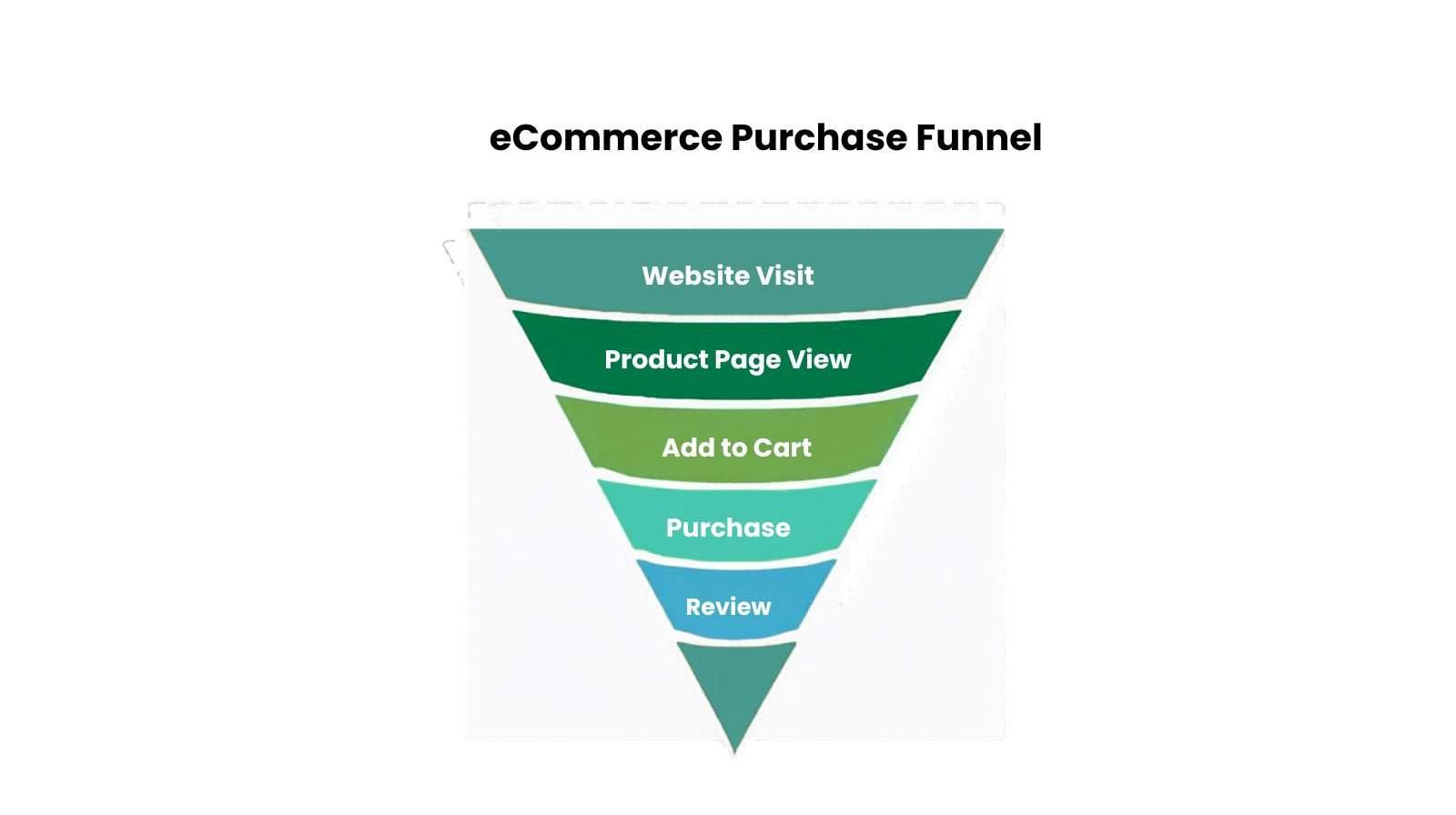
A purchase funnel is the step-by-step journey a shopper takes on your website—from the moment they land on your store to the moment they complete a purchase.
It’s called a “funnel” because, at each step, some visitors drop off. Your goal is to minimize that drop-off and guide as many people as possible to checkout.
A typical Shopify purchase funnel looks like this:
- Landing Page (Entry Point)
- Product Discovery
- Product Page
- Add to Cart
- Checkout
- Purchase Confirmation
Why Purchase Funnels Matter (More Than Traffic)
Many store owners focus heavily on driving traffic—but ignore what happens after someone arrives.
That’s like paying to bring people into a physical store… and then leaving them to figure everything out on their own.
A strong purchase funnel:
- Guides customers toward a decision
- Removes friction and confusion
- Builds trust at every step
- Increases your conversion rate without increasing ad spend
In other words, it helps you make more money from the traffic you already have.
Understanding Qualified Traffic
Before we go deeper, let’s clarify something important:
Qualified traffic = people who are actually likely to buy.
These visitors:
- Are interested in your product category
- Can afford your pricing
- Have a problem your product solves
Your funnel’s job is to convert this interest into action.
Breaking Down the Funnel (Step by Step)
Let’s look at each stage of the purchase funnel and what Shopify store owners should focus on.
1. Landing Page: First Impressions Matter
This is where visitors arrive—often from ads or social media.
You have seconds to answer:
- What is this brand?
- Is this relevant to me?
- Why should I care?
Best practices:
- Clear headline and value proposition
- Strong visuals that reflect your product
- Consistent messaging with your ad
If this step fails, the rest of the funnel doesn’t matter.
2. Product Discovery: Make It Easy to Browse
Once users are interested, they need to explore.
If your navigation is confusing or cluttered, they’ll leave.
Best practices:
- Simple, intuitive navigation
- Clear product categories
- Filters (size, price, use case, etc.)
Your goal is to help users quickly find what they’re looking for.
3. Product Page: Where Decisions Are Made
This is the most critical step in your funnel.
A strong product page answers every question a buyer might have.
Key elements:
- High-quality images and videos
- Clear product benefits (not just features)
- Pricing transparency
- Reviews and social proof
- FAQs
If your product page doesn’t build confidence, users won’t move forward.
4. Add to Cart: Reduce Hesitation
Getting someone to click “Add to Cart” is a major milestone—but it’s not the finish line.
At this stage, doubts can creep in:
- Is this worth it?
- Can I trust this brand?
Best practices:
- Show shipping details upfront
- Highlight return policies
- Reinforce guarantees (e.g., money-back)
5. Checkout: Eliminate Friction
This is where many sales are lost.
A complicated checkout process kills conversions.
Best practices:
- Offer guest checkout
- Minimize form fields
- Provide multiple payment options
- Be transparent about total cost (no surprise fees)
The easier it is to pay, the more people will complete the purchase.
6. Purchase Confirmation: Don’t Stop Here
Most brands treat this as the end—but it’s actually the beginning of retention.
Opportunities:
- Upsell or cross-sell products
- Encourage account creation
- Set expectations for shipping
- Introduce your brand story
Common Funnel Leaks (and How to Fix Them)
If your store isn’t converting, you likely have a “leak” in your funnel.
Here are some common ones:
- High bounce rate: Your landing page isn’t relevant or clear
- Low add-to-cart rate: Product pages aren’t persuasive enough
- Cart abandonment: Unexpected costs or lack of trust
- Checkout drop-off: Too many steps or limited payment options
Fixing these leaks can dramatically improve your revenue—without increasing traffic.
Final Thoughts
Driving traffic to your Shopify store is only half the equation.
Your purchase funnel is what turns that traffic into revenue.
When each step of the journey is intentional—clear messaging, strong product pages, frictionless checkout—you create an experience that makes buying easy.
And when buying is easy, more people do it.
Need Help?
If you need to fix your leaky funnel, RainMaker Marketing can help. Contact us and we’ll get your marketing machine working right away.